Taking a Trip to the Dark Web: What It Actually Is and How to Stay Safe — Linus Tech Tips Review Finds
The "dark web" gets treated in pop culture like a mythical digital underworld, but the reality is both more mundane and more genuinely risky than most people assume. It's a real, technically accessible part of the internet
— but it's also home to scams, malware, and a meaningful amount of illegal activity that everyday visitors should understand before ever opening a Tor browser. Here's an honest breakdown of what it actually is, what it's legitimately used for, and how to stay safe if you're curious.
Quick Comparison
Layer | Access Method | Example Content | Legal Status | ||
|---|---|---|---|---|---|
Surface Web | ✅ Standard browser, search engines | News sites, YouTube, social media | ✅ Fully legal | ||
Deep Web | ✅ Standard browser, direct login | Banking portals, private email, cloud files | ✅ Fully legal | ||
Dark Web | ⚠️ Requires Tor Browser or similar | .onion forums, whistleblower tools, marketplaces | ⚠️ Access is legal; activity varies |
1. What the Dark Web Actually Is
Overview: A Small, Deliberately Hidden Layer of the Internet
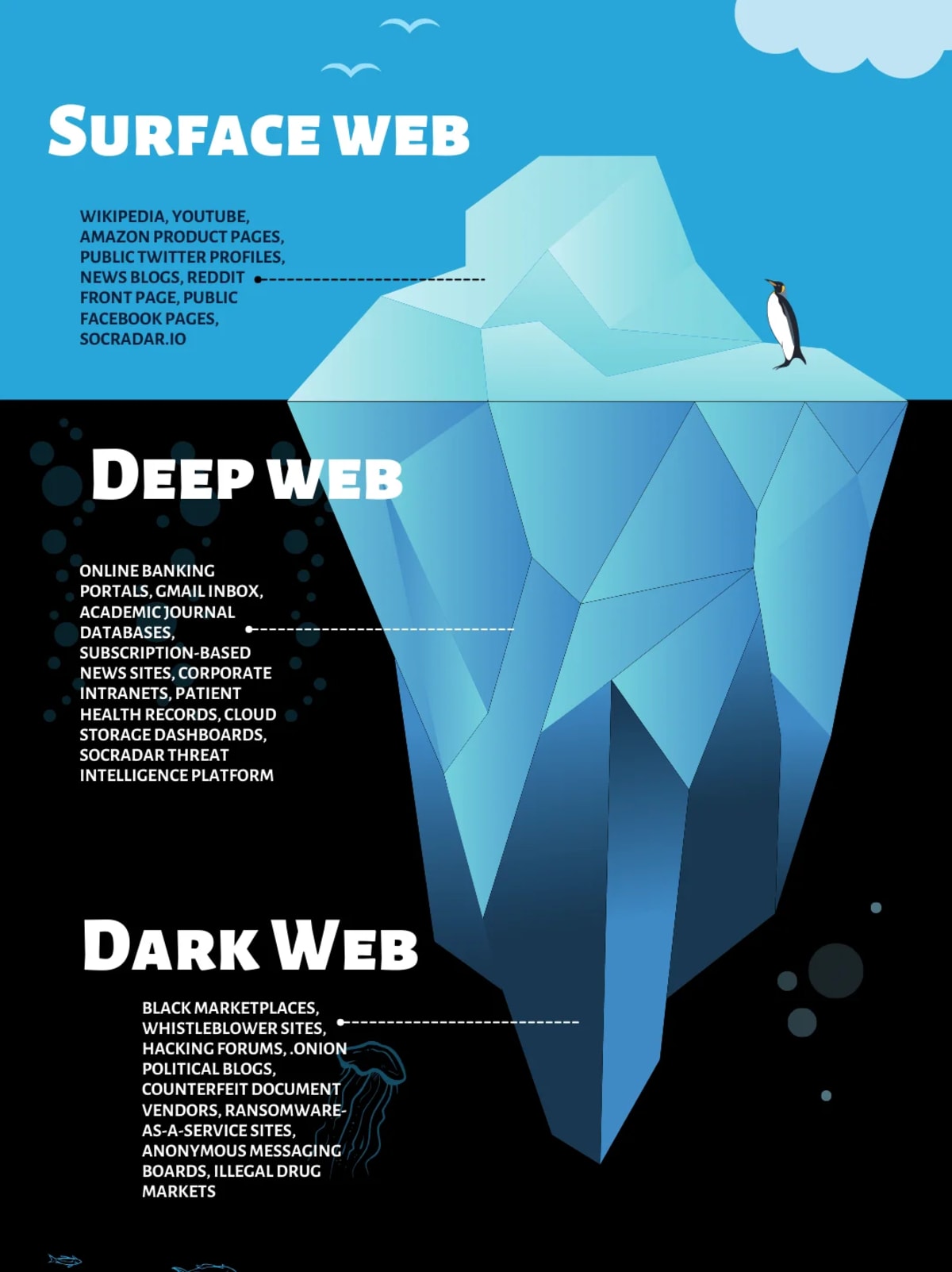
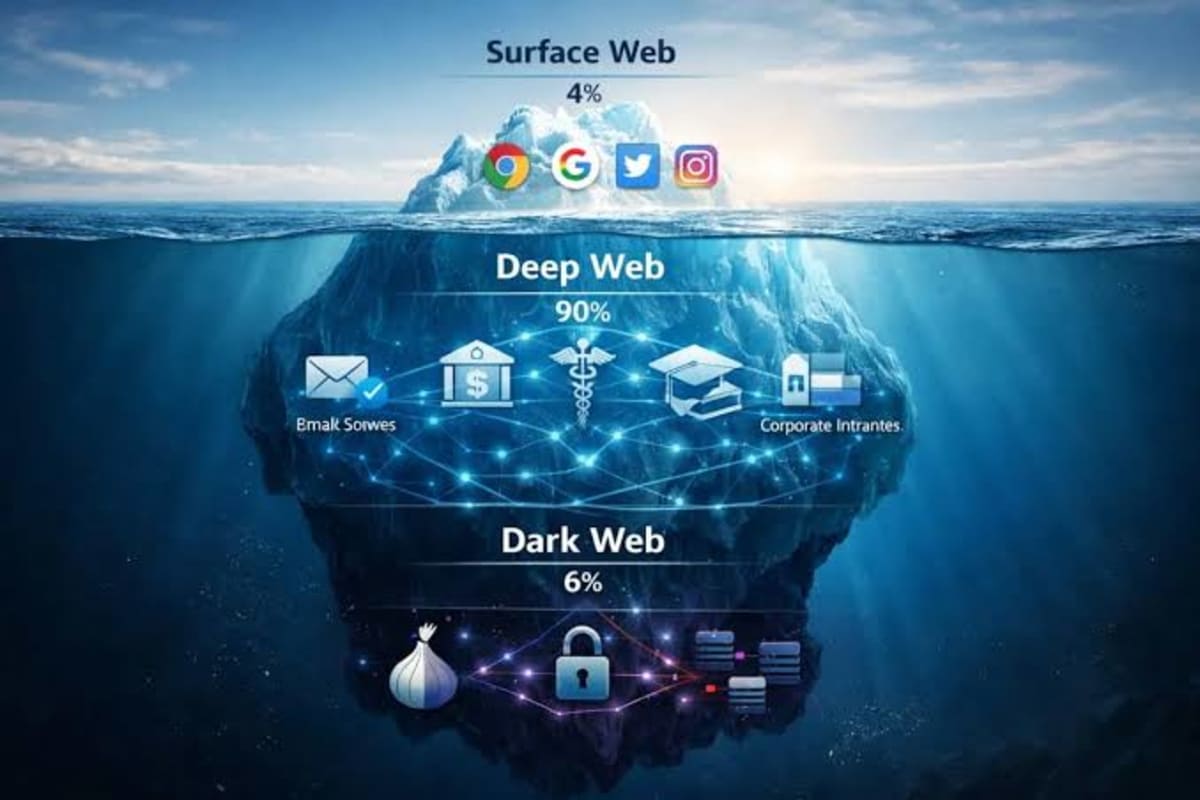
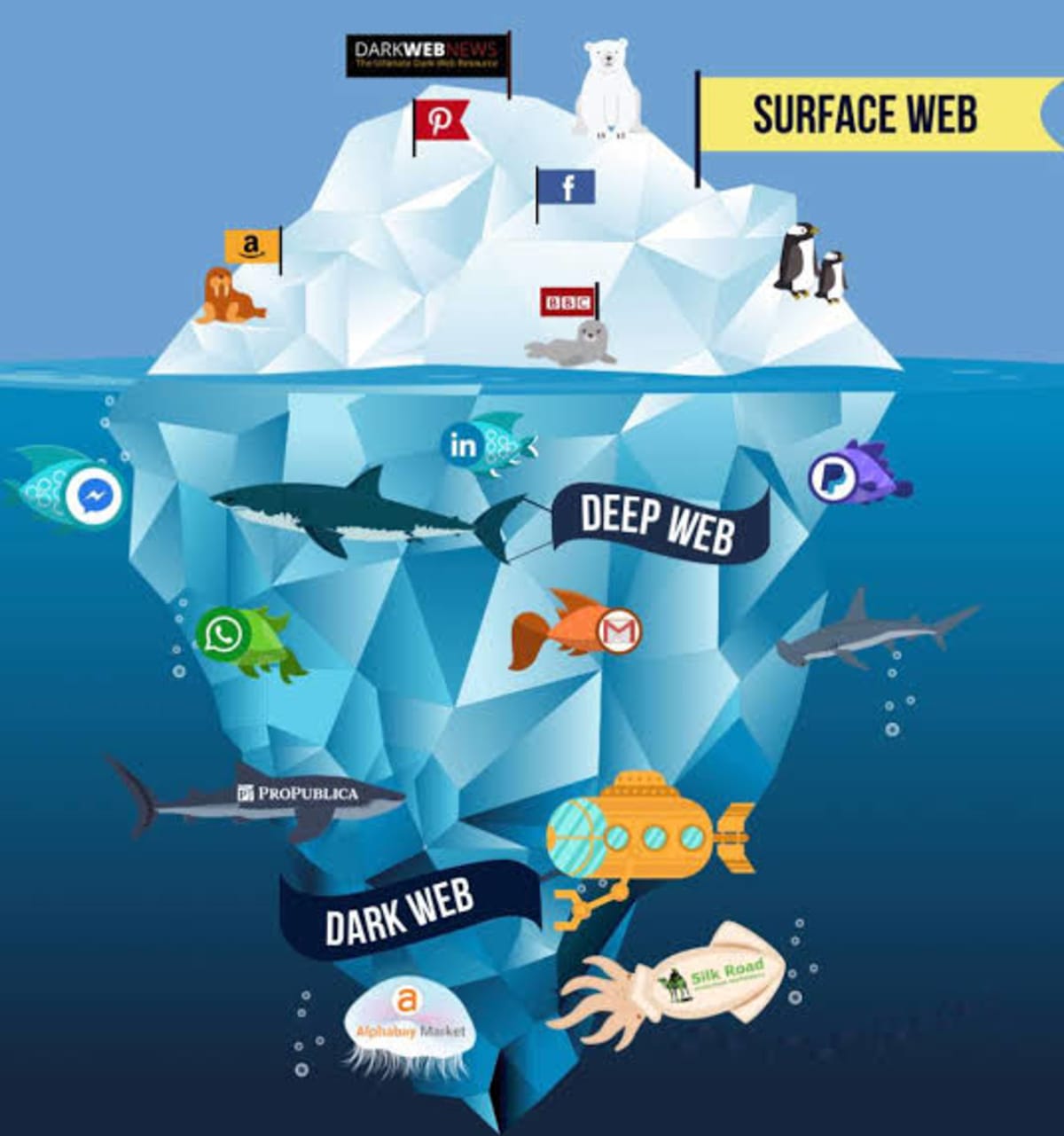
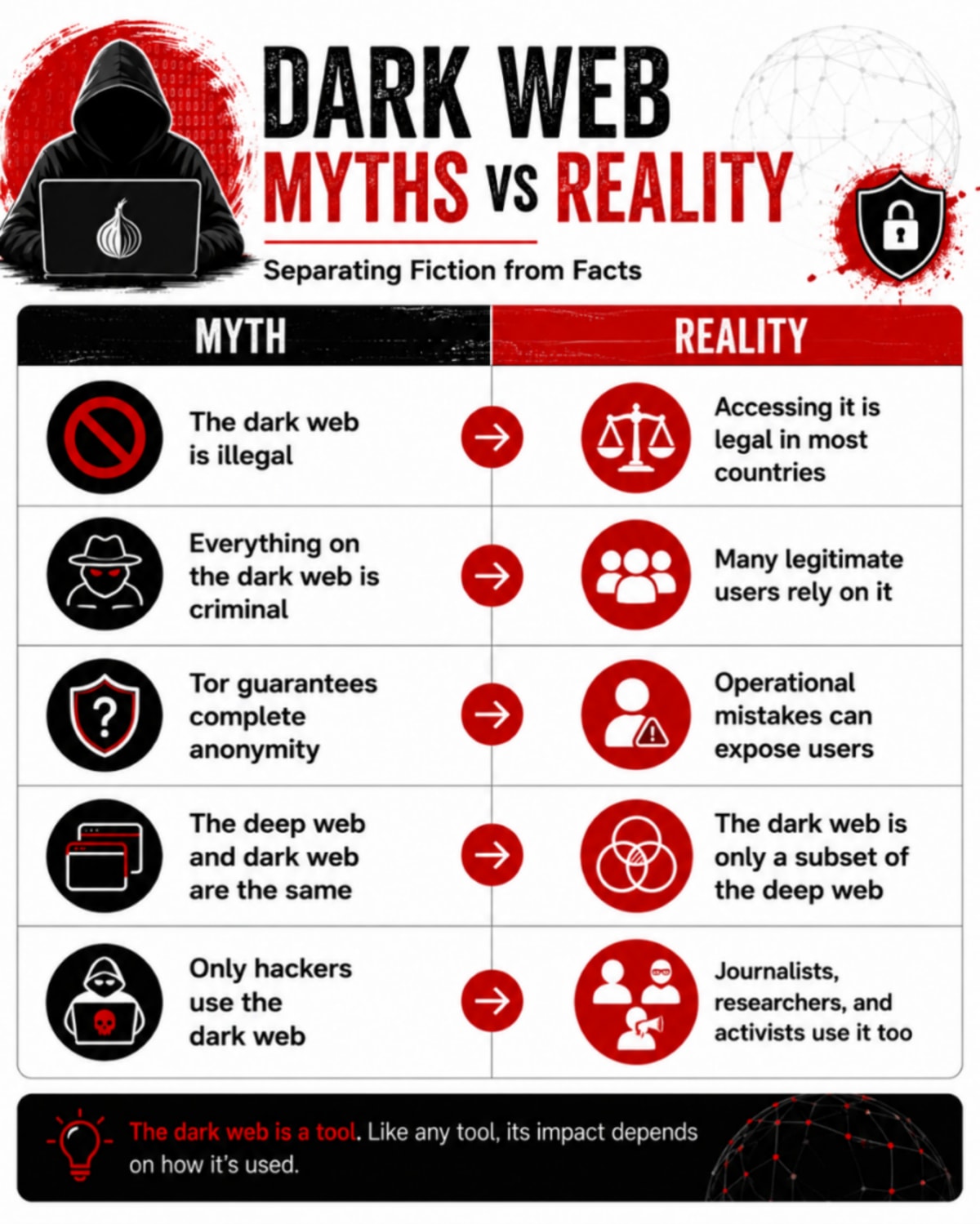
The "dark web" refers specifically to sites that require special software (most commonly the Tor Browser) to access, using addresses that end in .onion rather than standard domain names — it's distinct from the much larger "deep web," which just means any content not indexed by regular search engines, like your online banking portal or private email inbox.
Key Points:
- Surface web: Anything indexed by Google, Bing, etc. — the vast majority of what most people browse daily
- Deep web: Unindexed but ordinary content — banking logins, private cloud files, paywalled articles
- Dark web: A small subset of the deep web requiring specific software (typically Tor) to access at all
Why It Matters: Most "dark web" scare stories online are actually describing normal deep web content — understanding the distinction helps separate real risk from exaggerated headlines.
2. Is It Legal to Access?
Overview: Yes, Accessing It Is Legal — What You Do There Is What Matters
Simply downloading Tor and browsing .onion sites is legal in most countries, including the US, UK, and most of the EU — the legal risk comes entirely from what you do once you're there, not from the act of visiting.
Key Points:
- Using Tor itself is legal in the vast majority of countries (a small number of authoritarian states restrict or ban it)
- Purchasing illegal goods, accessing illegal content, or engaging in illegal transactions remains illegal regardless of which layer of the internet it happens on
- Law enforcement agencies actively monitor and operate on the dark web, including running sting operations on marketplaces
Why It Matters: Treat the dark web the same way you'd treat any other part of the internet from a legal standpoint — the technology doesn't grant anonymity from consequences, and it doesn't make illegal activity legal.
3. Legitimate Uses
Overview: Privacy, Journalism, and Censorship Circumvention
Beyond the illicit reputation, the dark web has real, legitimate uses tied to privacy and free expression — several major legitimate organizations maintain official .onion mirrors of their sites specifically for this reason.
Key Points:
- Whistleblowers and journalists use Tor-based tools (like SecureDrop) to communicate with sources anonymously
- Activists and journalists in heavily censored countries use it to access blocked information or communicate safely
- Several major outlets and organizations, including the BBC and ProPublica, maintain official .onion mirrors specifically to remain accessible in censored regions
- Privacy-focused researchers and security professionals use it for legitimate threat intelligence and research
Why It Matters: The dark web isn't inherently illegitimate technology — it's a tool, and like most tools, its legitimacy depends entirely on how it's used.

4. The Real Risks
Overview: Scams, Malware, and Illegal Content Are Genuinely Common
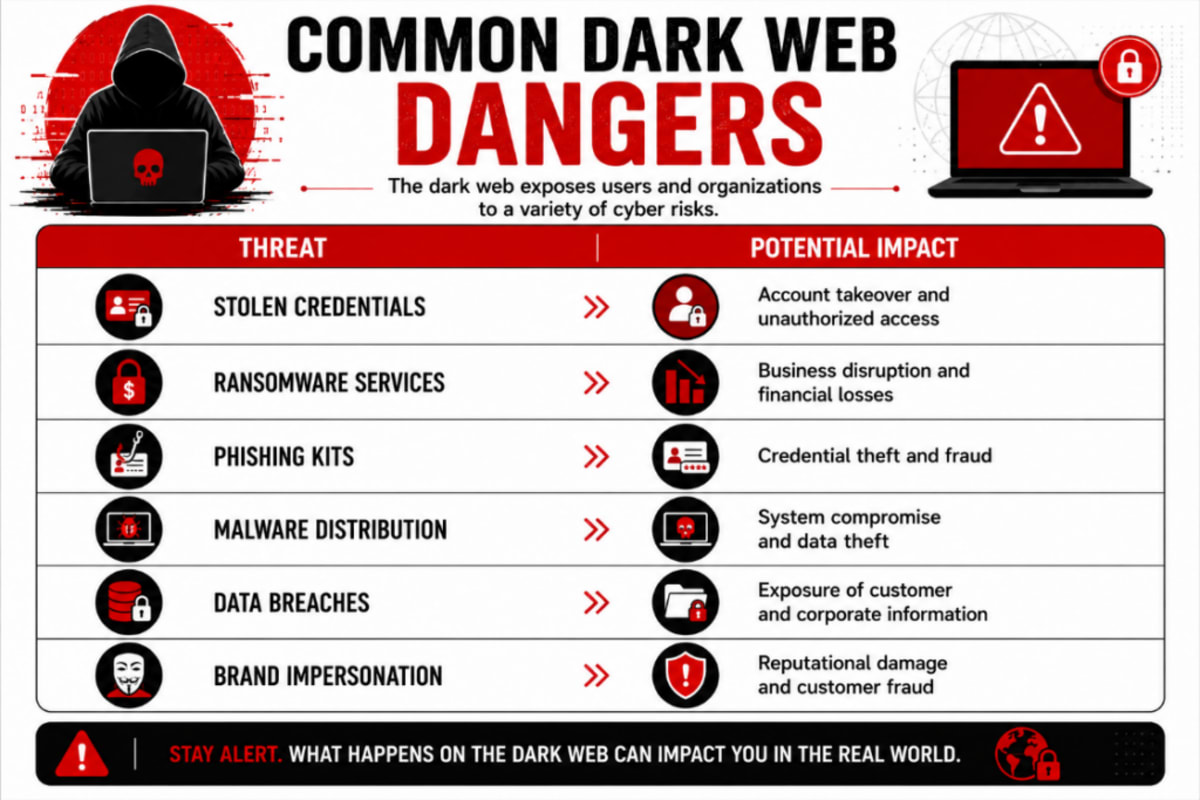
Unlike the regular web, there's no real content moderation, no consumer protection, and no way to verify who's actually running any given site — which makes scams and malicious content far more common than on the surface web.
Key Points:
- Marketplace scams are extremely common — there's no chargeback or dispute resolution system if you're defrauded
- Malware distribution is widespread, including on sites disguised as legitimate services or forums
- Genuinely illegal and disturbing content exists and can be encountered even accidentally through misleading links
- Law enforcement honeypots — fake marketplaces or forums designed to identify and prosecute users — are a real and ongoing tactic
Why It Matters: The lack of any moderation or accountability means the normal safety assumptions you might bring from the regular internet simply don't apply here.
5. How People Access It Safely
Overview: Tor Browser Is the Standard, But Precautions Matter
The Tor Browser is the standard, legitimate way most people access .onion sites, routing your traffic through multiple encrypted relays to obscure your identity and location — but using it safely requires more than just installing it.
Key Points:
- The Tor Browser is free, open-source, and available for Windows, Mac, Linux, and Android
- Many privacy-conscious users pair Tor with a reputable VPN for an additional layer of protection
- Privacy-focused operating systems like Tails are designed specifically to leave no trace on the machine you're using
- Keeping the Tor Browser's security settings on their highest level disables more attack surface (like JavaScript) at the cost of some site functionality
Why It Matters: Tor alone provides real anonymity protections, but combining it with sound general security practices meaningfully reduces your exposure to the risks unique to this part of the internet.
What Not to Do
- Don't download or open files from dark web sites — this is one of the most common malware infection vectors.
- Don't enter any personal information, including email addresses you use elsewhere, payment details, or anything that could be linked back to your real identity.
- Don't attempt to purchase anything from dark web marketplaces — beyond the obvious legal risk if the goods are illegal, marketplace scams are extremely common even for supposedly legitimate listings.
- Don't assume anonymity is guaranteed — deanonymization is possible through browser misconfiguration, correlated timing attacks, or simple human error like logging into a personal account.
- Don't go looking for illegal content out of curiosity — beyond the obvious legal exposure, some categories of content carry mandatory reporting or possession-based legal consequences even from accidental exposure.
Final Thoughts
The dark web is a real, technically legitimate part of the internet with genuine uses for privacy, journalism, and circumventing censorship — but it's also a genuinely higher-risk environment than the sites you visit every day, with essentially no content moderation, consumer protection, or accountability. If you're curious enough to explore it, treat it the way you'd treat any unfamiliar and unregulated environment: go in informed, keep your guard up, avoid transactions entirely, and remember that legal consequences for illegal activity apply exactly the same way they do anywhere else on the internet.
This is a sensitive topic in terms of personal safety and legal exposure — if you're looking into this out of a specific safety, legal, or security concern rather than general curiosity, it's worth consulting a cybersecurity professional or legal advisor who can speak to your specific situation.